

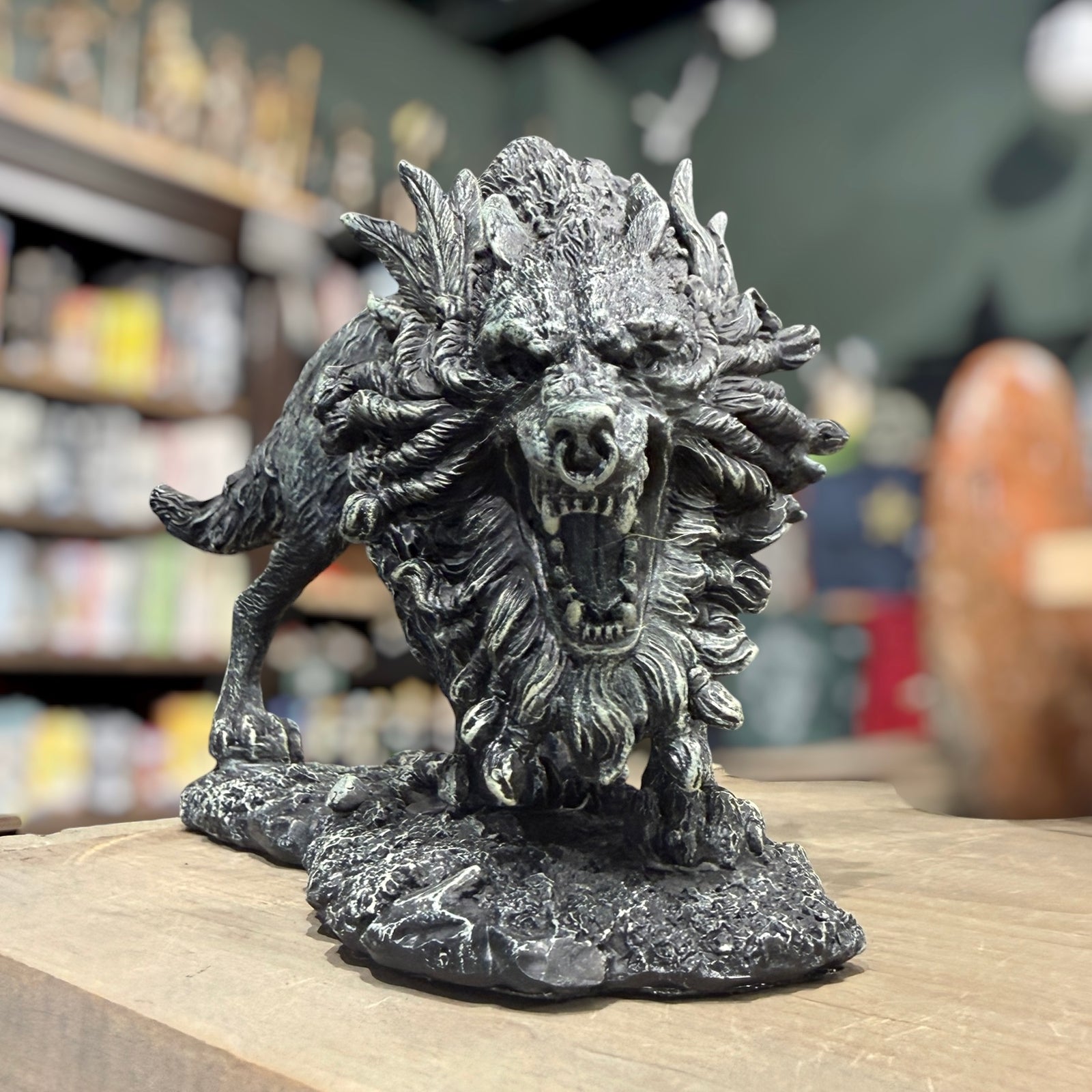

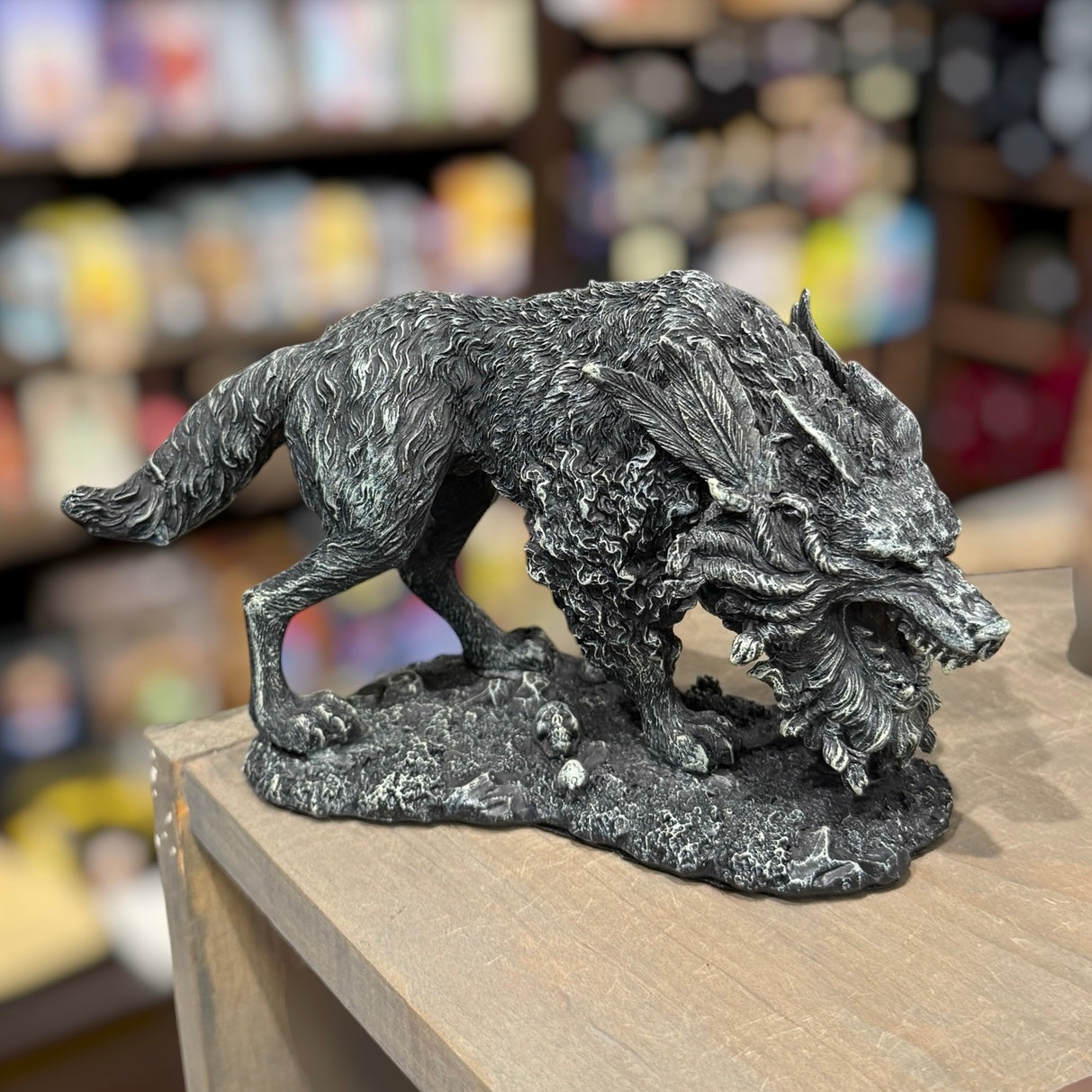

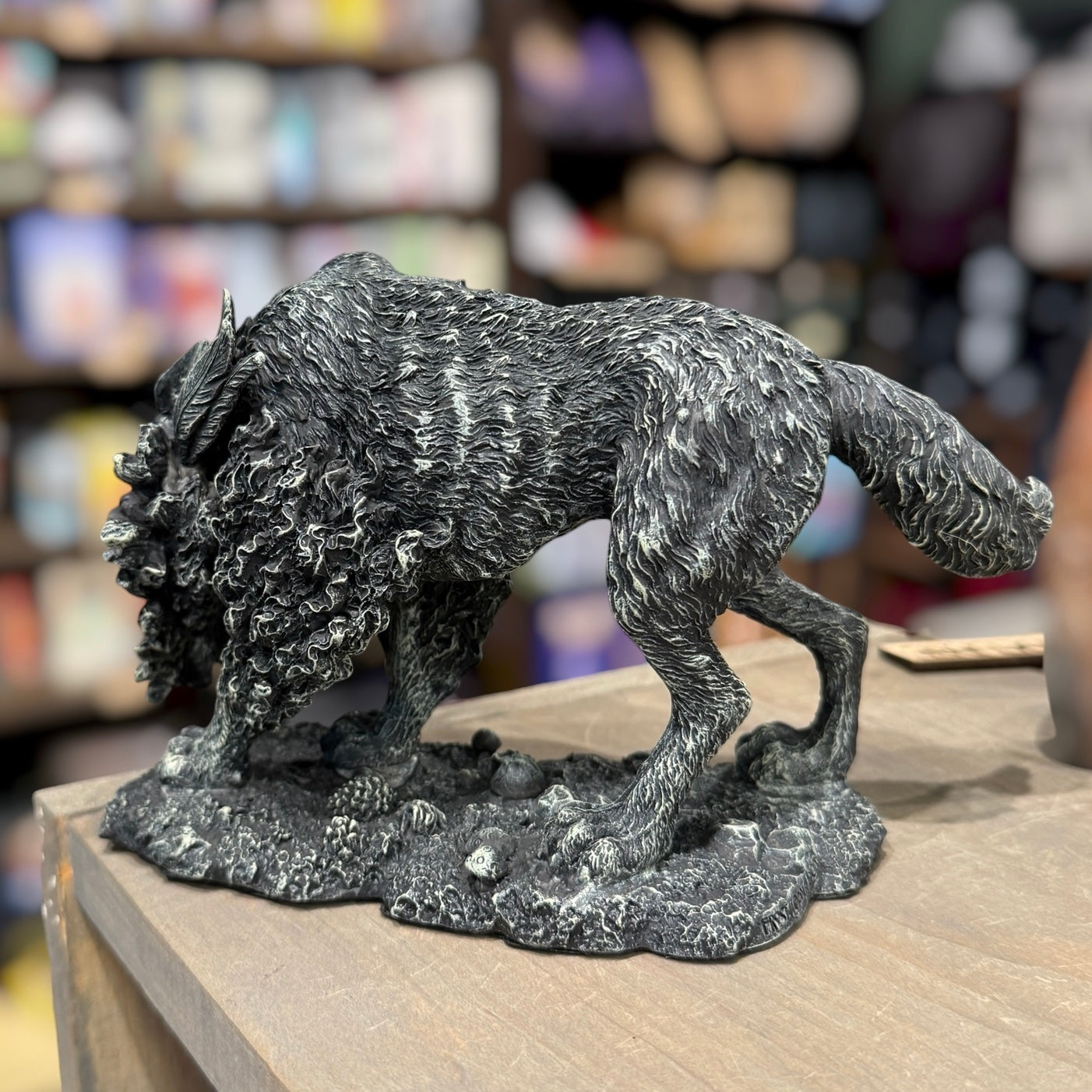

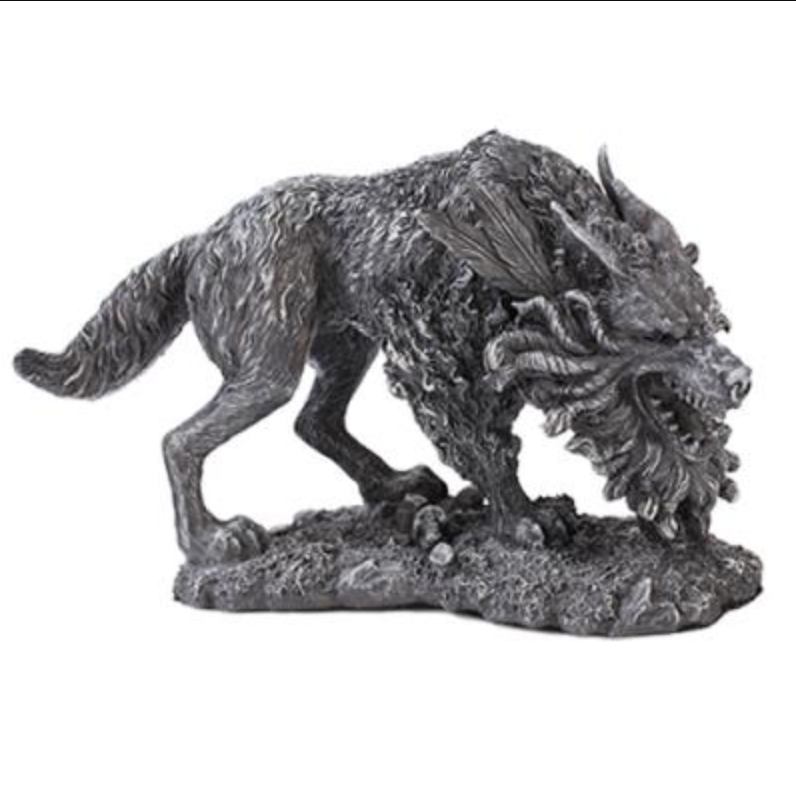

Fenrir Gargoyle Statue
- DIMENSION : 8.25" X 3.25' X 5"
- MATERIALS: COLD CAST RESIN
Pantheon: Norse
Domains: Chaos, Strength, Fate, Destruction, Transformation
🐺 Who Is Fenrir?
Fenrir is the mighty and terrifying wolf of Norse mythology, born of the trickster god Loki and the giantess Angrboða. He is the sibling of Jörmungandr (the World Serpent) and Hel (goddess of the underworld). From his birth, the gods feared Fenrir's immense strength and prophesied that he would one day bring about great destruction—most notably, devouring Odin during Ragnarök, the Norse end-times.
In an effort to prevent this fate, the gods raised Fenrir in Asgard but later betrayed him by binding him with a magical ribbon called Gleipnir. Only Týr, the god of justice and bravery, dared approach him—and lost his hand as a result of the trickery used to restrain the wolf.
🔥 Cultural Impact
Fenrir embodies both cosmic chaos and the inevitability of fate. He is a symbol of wild power, rage against oppression, and the price of betrayal. His story is not one of pure evil, but of a being who was feared, constrained, and ultimately pushed toward the role he was prophesied to play.
Modern interpretations often view Fenrir as a misunderstood force—representing the shadow self, untamed instincts, or the necessary destruction that precedes transformation and rebirth.
🕯️ Modern Worship & Offerings
Fenrir is honored today by those who walk paths of chaos magick, shadow work, personal liberation, and primal strength. He speaks to the wild within us and the inevitability of change.
Common Offerings Include:
-
Raw or bloody meat (symbolically or ritually)
-
Bones or imagery of wolves
-
Iron or broken chains
-
Bloodstone, black obsidian, smoky quartz
-
Primal howls, drums, or night rituals
-
Oaths of truth and strength
🐾 When to Work With Fenrir
-
During shadow work or rage release rituals
-
When confronting betrayal, injustice, or constraint
-
To break free from energetic or spiritual chains
-
In times of immense personal transformation
-
As a guardian figure when walking dangerous paths
-
When invoking power that cannot be tamed