Menu
-
-
Crystals A-B
- Abalone
- Afghanite
- Agate
- Alunite
- Amatrine
- Amazonite
- Amber
- Amethyst
- Ammonite
- Andean Opal
- Angelite
- Anhydrite
- Apache Tears
- Apatite
- Apophyllite
- Aquamarine
- Aragonite
- Aura & Titanium
- Auralite 23
- Aurichalcite
- Aventurine
- Azurite
- Barite
- Bismuth
- Black Agate (Sulemani)
- Black Galaxy Jasper
- Black Kyanite
- Black Obsidian
- Black Onyx
- Black Tourmaline
- Bloodstone
- Blue Dot Jasper
- Blue Kyanite
- Blue Lace Agate
- Blue Quartz
- Blue Riebeckite
- Blue-Green Kyanite
- Bornite
- Botswana Agate
- Brecciated Jasper
- Brucite
- Bumblebee Jasper
-
Crystals C-F
- Calcite
- Carborundum
- Carnelian
- Cats Eye
- Cavansite
- Celestite
- Cerussite
- Chalcedony
- Chalcopyrite (Peacock Ore)
- Charoite
- Chiastolite
- Chlorite in Quartz
- Chrome Diopside
- Chromewood
- Chrysanthemum Stone
- Chrysocolla
- Chrysoprase
- Cinnabar
- Cintamani
- Citrine
- Clear Quartz
- Cobaltoan Calcite
- Conichalcite
- Coppernite
- Coquimbite
- Coral Fossil
- Crazy Lace Agate
- Dalmation Stone
- Danburite
- Dendritic Agate
- Dendritic Opal
- Desert Jasper
- Desert Rose
- Dragon Blood Stone
- Dumortierite
- Emerald
- Epidote
- Faden Quartz
- Fancy Jasper
- Feather Agate
- Fire Agate
- Flourite
- Flower Agate
- Fossils
- Fruit Jasper
-
Crystals G-M
- Galena
- Garnet
- Garnierite
- Geothite
- Glaucophane
- Gobi Agate
- Gold stone
- Golden healer
- Grape Agate
- Gray Agate
- Gypsum
- Hackmanite
- Halite
- Hanksite
- Hematite
- Hemimorphite
- Hematoid Quartz
- Herkimer Diamond
- Howlite
- Hypersthene
- Ibis Jasper
- Indigo Gabbro
- Indigo Kyanite
- Iolite
- Jade
- Jasper
- Jet
- K2
- Kambaba Jasper
- Kunzite
- Kyanite
- Labradorite
- Lake Superior Agate
- Lapis Lazuli
- Larimar
- Larvikite
- Lava Rock
- Leopardite
- Lepidolite
- Libyan Desert Glass
- Lion Skin Jasper
- Lodolite
- Luminite
- Malachite
- Maligano Jasper
- Mango Quartz
- Merlinite
- Mojave Marbles
- Moldavite
- Mookaite Jasper
- Moonstone
- Morganite
- Moss Agate
-
Crystals N-R
- Nephrite Jade
- Noreena Jasper
- Obsidian
- Ocean Jasper
- Onyx
- Opal
- Opalite
- Orpiment
- Orthoceras
- Orthoclase
- Palm Root
- Pearls & Shells
- Peridot
- Petrified Wood
- Petroleum Quartz
- Picasso Jasper
- Picture Jasper
- Pietersite
- Pine Jasper
- Pink Zebra Jasper
- Plum Jasper
- Polychrome Jasper
- Prasiolite
- Prehnite
- Prophecy Stone
- Psilomelane
- Purpurite
- Pyrite
- Pyrolusite
- Quantum Ocho
- Red Jasper
- Rhodochrosite
- Rhodonite
- Rhyolite
- Rose Quartz
- Rubellite (Pink Tourmaline)
- Ruby
- Rutilated Quartz
-
Crystals S
- Sapphire
- Sardonyx
- Scapolite
- Schorl
- Scolecite
- Selenite
- Septarian
- Seraphinite
- Serpentine
- Shiva Lingam
- Shungite
- Smithsonite
- Smoky Citrine
- Smoky Quartz
- Snowflake Obsidian
- Sodalite
- Spessartine
- Sphalerite
- Spirit Quartz
- Spotted Agate
- Star Ruby
- Stichtite
- Stillbite
- Stilpnomelane
- Stromatolite
- Sunstone
- Super 7
-
Crystals T-Z
-
Crystals by Shape
-
Home & Altar
- Altar Cloths
- Altar Tables
- Altar Tools
- Bath Salts
- Bells & Chimes
- Brooms/Besoms
- Chalices/Cups/Mugs
- Cauldrons
- Grid Plates
- Singing Bowls
- Boxes
- Bags & Pouches
- Handbags
- Fun & Games
- Enamel Pins
- Keychains
- Evil Eyes
- Greeting Cards
- Journals & Sationery
- Magnets
- Oddities
- Pendulums
- Runes (Norse & Witch)
- Spell Kits & Bottles
- Protection Section
- Prayer Flags
- Tapestries
- Handmade Soap
- Tattoos
- Sacred Waters & Sprays
- Ornaments
- Dream Catchers
- Lamps
- Wall Art
-
Statues
-
Jewelry
-
Candles/Oils
- MMCOC Mojo Candles
- MMCOC Magick Candles
- MMCOC House-Made Candles
- Deity Pillar Candles
- Figure Candles
- Taper/Spell Candles
- Maiden Minx Intention Candles
- Candle Holders
- Matches & Candle Snuffers
- 7 Day Candles
- Tea Light Candles
- Essential Oils
- Fragrance/Anointing Oils
- Oil Diffusers
- Sacred Sprays
- Wax Melts
-
Tarot/Oracle/Divination
-
Coffee/Tea
-
Books
-
Incense & Herbs
-
Meet Our Psychics
- Deity Information
-
- About
- Contact
- Practitioners
- Login
-
USD

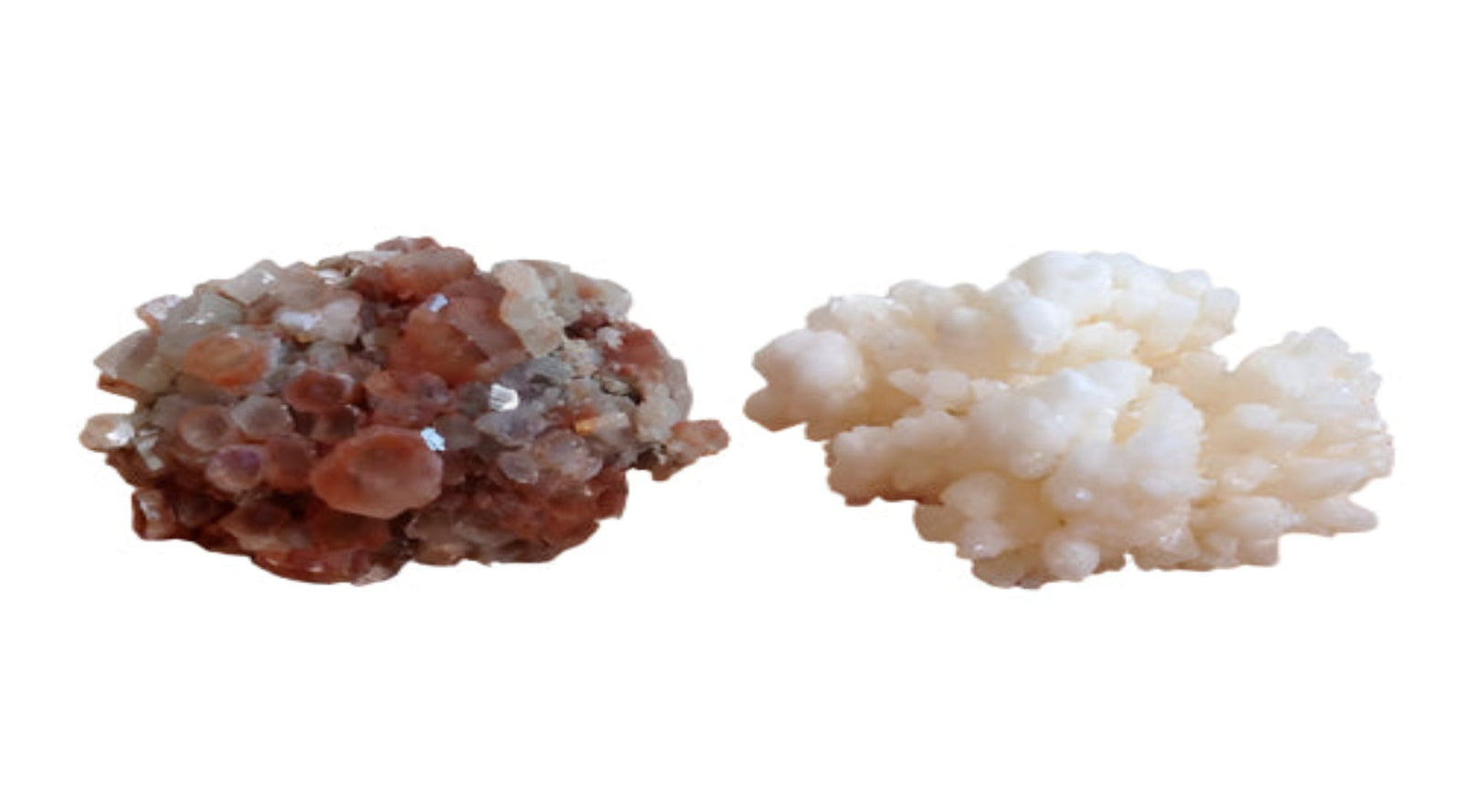

Aragonite
Recently Viewed
Aragonite and calcite are polymorphs of calcium carbonate. A polymorph is a solid material that can exist in multiple crystal structures. Therefore, both can be CaCO3 without having the same crystal shape, thus creating some differences.
Aragonite, a calcium carbonate mineral, is often associated with stress relief, grounding, and promoting practicality. In geology, it forms in low-temperature hydrothermal deposits, around hot springs, and in basalts. It is known for its orthorhombic crystal structure and can have acicular, prismatic, or pseudohexagonal habits.
Geological Properties:
- Chemical Composition: Aragonite is a calcium carbonate (CaCO3).
- Crystal Structure: It has an orthorhombic crystal structure, meaning it has three axes of different lengths.
- Form/Habit: Aragonite can form as acicular (needle-like) crystals, prismatic (rod-like) crystals, or pseudohexagonal crystals (due to twinning).
- Formation: It forms in various environments, including low-temperature hydrothermal systems, as speleothemes (cave formations), and in marine sediments.
- Color: Aragonite can be translucent or white when pure, but impurities can cause variations in color, such as yellow, green, pink, blue, purple, red-orange, and brown according to FossilEra.com.
Metaphysical Properties:
- Stress Relief: Aragonite is believed to be a powerful stress reliever and encourages patience and acceptance.
- Intuition and Vision: It is thought to stimulate the third eye and crown chakras, potentially increasing intuition and opening one to new visions.
- Grounding and Stability: It is often associated with connecting to the Earth and grounding one's energy.
- Practicality and Discipline: Aragonite is said to encourage practicality and discipline, helping to create structure in life.
- Chakra Alignment: It is believed to connect the root chakra to the Earth, promoting a sense of groundedness.
- Physical Benefits: Some Crystal Mountain Australia states that it combats disease, calms the mind, and strengthens the immune system.


